For a child between six and eight hearing Bible stories for the first time in real depth, the easiest place to start is Noah and the flood, then Abraham, Joseph, Moses, David, and Daniel, in that order. Reading roughly in the order these events happen in Scripture helps a young child build one continuous story instead of six unrelated tales, and each book below is written specifically for that age, with a verse to remember and questions parents can ask afterward.
Why does reading order matter for young kids?
A six-year-old doesn't yet carry a mental timeline of the Old Testament the way an adult reader does. When stories are read roughly in the order they happened, a child starts to notice connections on their own — that the God who kept Noah safe in the flood is the same God Abraham trusted decades later, and the same God who split the sea for Moses centuries after that. That sense of one continuous story, rather than a shelf of disconnected fables, is worth more at this age than covering every possible Bible story at once.
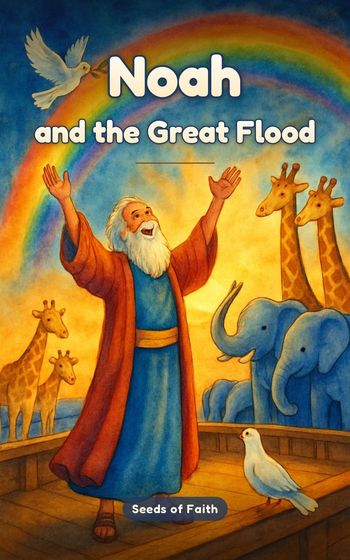
1. Start with Noah and the Great Flood
Noah is a natural starting point: a single family, a clear command, and years of obedience even while the neighbors mock him every day for building a boat on dry land. Told faithfully from Genesis 6-9, the story shows a child what it looks like to keep obeying when nobody else understands why — and it ends with a promise painted across the sky that still means something today. The full story, illustrated for ages 6-8, is Noah and the Great Flood.
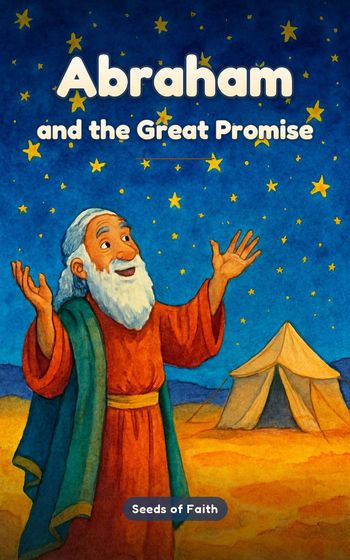
2. Then Abraham and the Great Promise
Once a child has met Noah, Abraham is the natural next step: a man who leaves everything he knows for a land he hasn't even seen yet, and who waits decades for a promise that seems to get more impossible every year. It's a slower story than Noah's, better suited to a child who has already sat through one full book, and it introduces the idea of trusting God without seeing the whole road ahead. Read it in Abraham and the Great Promise.
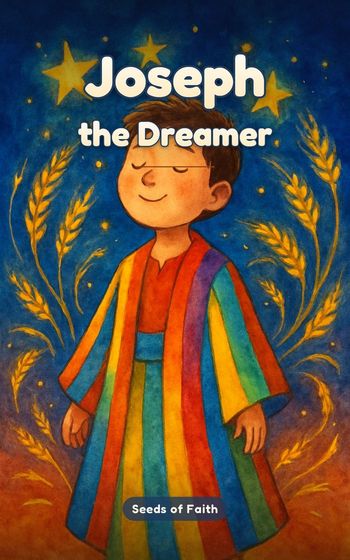
3. Joseph, the Dreamer
Joseph's story moves fast — jealous brothers, a betrayal at a cistern, years as a slave and then a prisoner in Egypt, and finally forgiveness offered to the very brothers who sold him. It's the first story on this list that deals openly with family conflict, which makes it a natural opening to talk with a child about jealousy and forgiveness before life teaches that lesson the hard way. The full account, drawn faithfully from Genesis 37-46, is in Joseph, the Dreamer.
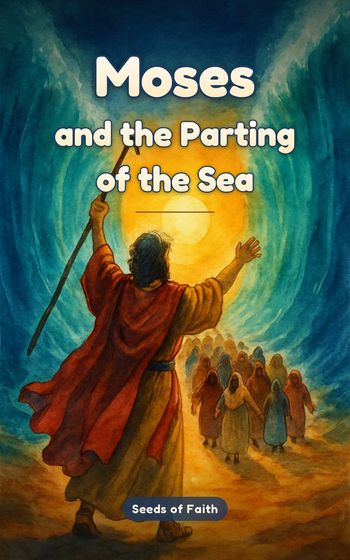
4. Moses and the Crossing of the Sea
Moses gives a child one of the most visual stories in the entire Old Testament: a baby hidden in a basket on the Nile, a burning bush, ten plagues, and a sea splitting into two walls of water so an entire people can walk across on dry ground. Told faithfully from Exodus 1-15, it's a good story to place after Joseph, since Joseph's own move to Egypt is part of what set the stage for the Exodus generations later. It's told in Moses and the Crossing of the Sea.
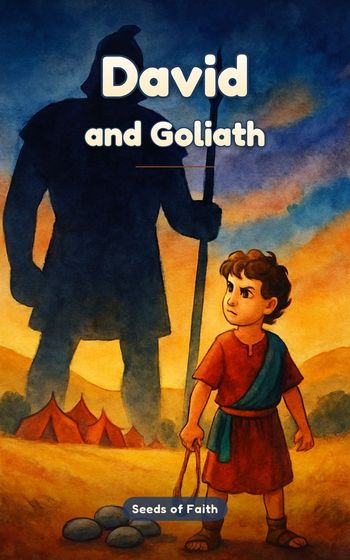
5. David and Goliath
By this point, a child has met several adults who trusted God against long odds. David and Goliath adds a hero closer to a child's own size: a shepherd boy, too young for armor that fits him, walking out to face a giant with five stones from a stream. Grounded in 1 Samuel 16-17, the story is honest that the victory came from God, not from David's own strength — a distinction worth making clear to a young reader. Find it in David and Goliath.
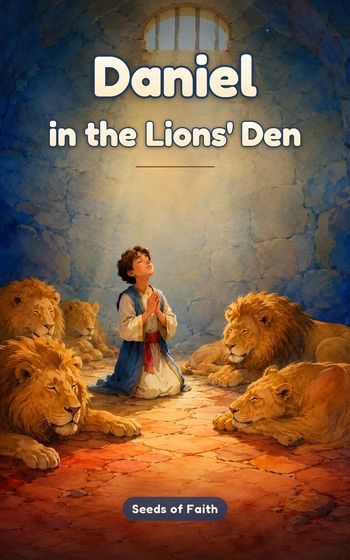
6. Daniel and the Lions' Den
Daniel is a strong closing story for this age range because it asks a question a six- to eight-year-old can already understand: what do you do when a rule tells you to stop doing what's right? Daniel keeps praying three times a day even after a new law makes it a capital offense, spends a full night in a den of hungry lions, and walks out unharmed the next morning. Told with strict fidelity to Daniel 6, it never confuses this account with the different story of the fiery furnace, and it closes the list with a picture of quiet, steady courage a child can actually imitate.
Do these books follow the Bible text closely, or are they simplified?
Every book in this list stays close to what Scripture actually records rather than inventing dramatic details to make the story more exciting. Genesis says God, not Noah, shut the door of the ark, and the rainbow appears only at the end — details these books get right rather than smoothing over. That same care carries through the whole set: no invented villains, no swapped-out plot points, no scares inflated beyond what a six-year-old needs to hear. Each book ends with a verse to keep in your heart and ready-made questions for you to talk through with your child afterward, so the reading doesn't stop when the last page turns.
Where to find the full Little Seeds of Faith series
All six books above belong to Little Seeds of Faith, a series written specifically for children ages 6 to 8, with vocabulary built for reading aloud and illustrations for every story. If your child responds well to one of these six, the rest of the series continues with more stories written the same way — faithful to Scripture, sized for a young reader, and ready for a bedtime routine that can start tonight.