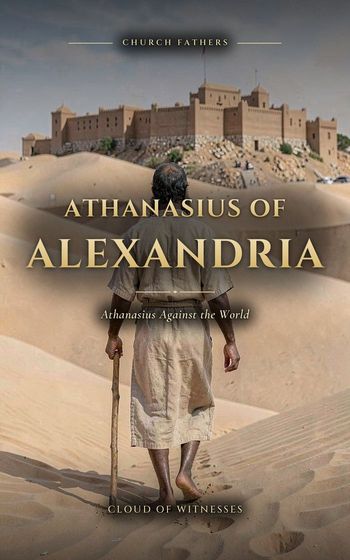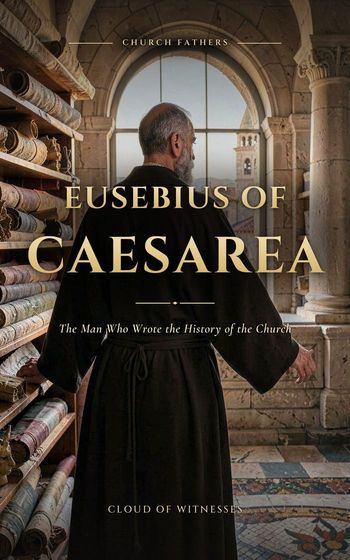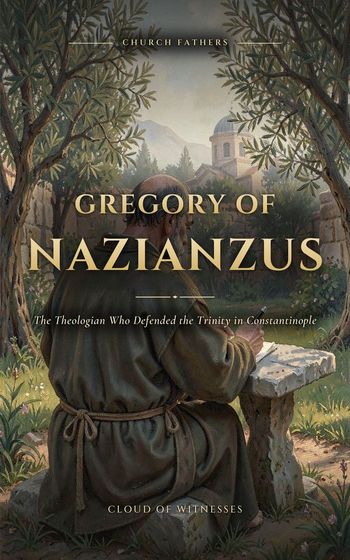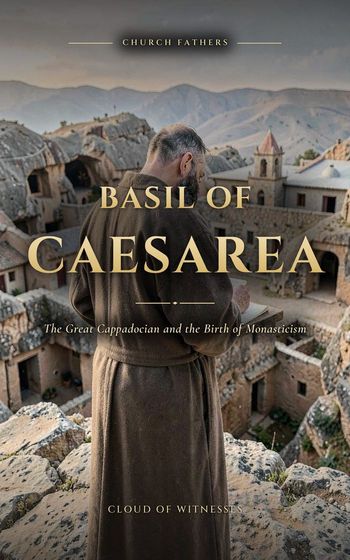
In 325, bishops from across the Roman Empire gathered in the town of Nicaea, in Asia Minor, to settle a question that had already split churches from Egypt to Asia Minor: was Jesus Christ truly God, sharing the Father's own nature, or was he a created being — the first and greatest of God's works, but not eternal? The council answered with a single Greek word, homoousios, "of the same substance," and a young deacon standing in the room that year would spend the rest of his life paying the price of that word. His name was Athanasius of Alexandria.
What did the Council of Nicaea actually decide?
The council had been called by Emperor Constantine to end a dispute started by an Alexandrian presbyter named Arius, who taught that the Son had a beginning — that there was, in his own phrase, "a time when he was not." Bishops from across the empire debated the question and produced a creed stating that the Son is homoousios with the Father, not merely similar to him but of the very same substance. Among those present was a deacon still in his twenties, Athanasius, attending alongside his own bishop, Alexander of Alexandria. Also present was Eusebius of Caesarea, already known for the church history he had spent years compiling — and who signed the creed that day with a reluctance he documented himself, in a letter explaining to his own congregation exactly how he had reconciled his conscience to the council's wording. His account is one of the reasons historians today can reconstruct what actually happened at Nicaea rather than relying only on later legend.
Why didn't Nicaea end the argument?
A council's vote did not change what most bishops in the eastern half of the empire actually believed. Arian and semi-Arian positions kept dominating church politics for decades after 325, and Athanasius became bishop of Alexandria at only twenty-seven, inheriting a fight that would define nearly his entire forty-five years in office. He was exiled five times by successive emperors, for different reasons and under different pretexts — sent to Trier, to Rome, and at one point into the Egyptian desert among the monks, where his friendship with the hermit Anthony took shape, the same bond that later produced his own account of Anthony's life. Each exile meant real loss: pastoral authority, resources, personal safety, years spent away from the city he had been ordained to serve. The famous phrase historians repeat about him, "Athanasius against the world," is not something he said about himself — it is a later attribution to Jerome, popularized long after Athanasius's death, though it does capture something true about how isolated his defense of homoousios often was.
What was Eusebius of Caesarea's real role in all this?
Eusebius is the reason so much of this story survives at all. His Historia Ecclesiastica is the founding work of church history as a genre, and without it, whole chapters of early Christianity would be unknown. But Eusebius was also a complicated figure in the Nicene story itself: closer to imperial power than most bishops of his generation, theologically closer to subordinationist circles before Nicaea than to the strict Nicene position, and later involved in the disputes that helped push Athanasius into exile. None of this makes him a villain — his pre-Nicene leanings were never full-blown Arianism, and an accusation that he apostatized during persecution surfaced only decades later, from a theological opponent, and is treated by historians as exactly that: an accusation, not a fact. What it does show is that signing a creed in 325 did not settle every bishop's convictions overnight.
How did the fight over the Trinity finally get resolved?
Nicaea had settled the divinity of the Son, but it left the status of the Holy Spirit less defined, and that gap kept the controversy alive for another two generations. It was largely closed by two Cappadocian bishops, close friends since their student years together in Athens. Basil of Caesarea wrote De Spiritu Sancto, building the theological case for the Holy Spirit's full divinity with a diplomatic precision that modern scholars read as deliberate strategy rather than hesitation — the same man who, according to his friend's own account, once told an imperial prefect threatening him with exile and death that the prefect had perhaps never met a real bishop before. Gregory of Nazianzus led a small Nicene congregation through a Constantinople still dominated by Arian bishops, delivered the addresses that earned him the rare title "the Theologian," and presided over the Council of Constantinople in 381 — the council that confirmed the Nicene faith and settled the Spirit's divinity — before resigning from it himself in a farewell speech still remembered for its candor.
Where should you start reading about Nicaea and the Trinity debate?
Read Eusebius of Caesarea first if you want the eyewitness's own uneasy account of the council itself. Then follow Athanasius of Alexandria through the five exiles that turned one word into the fight of a lifetime. Finish with Basil of Caesarea and Gregory of Nazianzus, the two Cappadocian friends who carried the same argument to its conclusion two generations later, in Constantinople rather than Nicaea. All four biographies belong to the Cloud of Witnesses series, and reading them in that order turns a fourth-century church council into a story about real people who paid a real price for a single word. For the wider map of names and dates around them, the Church Fathers timeline is a good place to see how they connect.