The Church Fathers were the Christian leaders and writers who guided the church in the centuries right after the apostles, and their story runs in a fairly clear line from the late first century to the Council of Nicaea in 325 AD. Reading them in order — rather than as a pile of unfamiliar Latin and Greek names — turns out to be the easiest way to actually understand how Christian doctrine and church structure took shape.
Late first century: Clement of Rome and Ignatius of Antioch
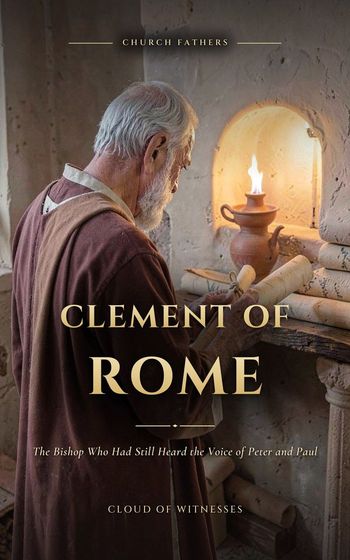
The timeline opens close to living memory of the apostles themselves. Clement of Rome wrote his letter to the church at Corinth around the close of the first century, decades after Peter and Paul had died in Rome under Nero. Irenaeus of Lyon later testified that Clement "had seen the blessed apostles" personally — one of the last direct links to that founding generation. Clement's letter addressed a real crisis: faithful presbyters in Corinth had been deposed by an ambitious faction, and Clement argued, using Abraham, Rahab, and the order of the stars as illustrations, that legitimate church authority comes from continuity with the apostles, not from whoever seizes it. His story is told in Clement of Rome: The Bishop Who Still Heard the Voice of Peter and Paul.
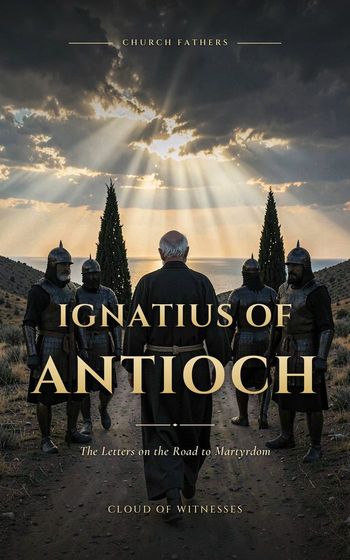
Not long after, sometime between 107 and 110 AD, Ignatius of Antioch was marched under Roman guard from Antioch toward execution in Rome. Along the way he wrote seven letters that survive to this day, including one to Polycarp, the younger bishop of Smyrna he met in person during the journey. Ignatius's letters are the first place a Christian writer lays out, systematically, the unity of the church around the local bishop. His full story is in Ignatius of Antioch: The Letters from the Road to Martyrdom.
Mid-second century: Justin Martyr defends the faith in Rome
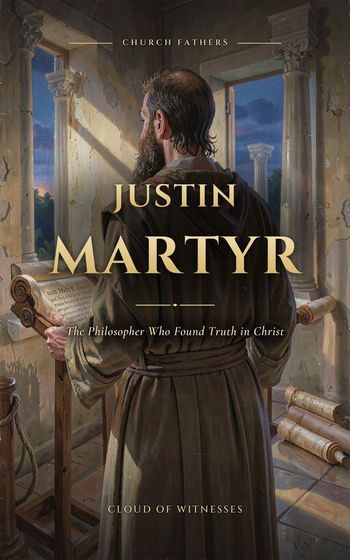
By the middle of the second century, the church faced a different kind of challenge: educated pagan suspicion. Justin Martyr, a former philosopher who had studied under Stoics, Peripatetics, and Platonists before his conversion, opened a Christian school in Rome and addressed his First Apology directly to the emperor, defending Christians against common accusations. He also wrote the Dialogue with Trypho, an extended debate with Judaism, and left one of the earliest outside descriptions of how Christians celebrated the Eucharist. Justin's life and writing are covered in Justin Martyr: The Philosopher Who Found Truth in Christ.
Late second century: Irenaeus of Lyon confronts Gnosticism
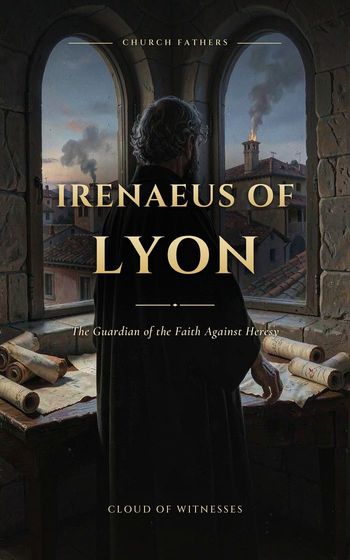
Around 177 AD, a mob in Lyon dragged Christians off to public execution. Irenaeus, a presbyter of that same church, escaped the massacre only because he was traveling to Rome at the time carrying a letter. Formed in Asia Minor at the feet of Polycarp of Smyrna, Irenaeus later became bishop of Lyon and wrote Against Heresies, five books that dismantle, system by system, the Valentinian Gnosticism claiming secret knowledge unavailable to ordinary believers. It is in these pages that the arguments for apostolic succession, and for Christ as the new Adam who sums up and restores humanity, first take clear shape. His biography is Irenaeus of Lyon: The Guardian of the Faith Against Heresies.
Turn of the second into the third century: Tertullian names the Trinity
A little later, in Roman Carthage, Tertullian — trained in rhetoric and possibly Roman law before his conversion as an adult — gave Western theology the words "Trinity," "person," and "substance," coining them while refuting a teacher named Praxeas who denied real distinction between the Father and the Son. Tertullian's is one of the most complicated stories in this era: the same jurist's precision that made him Christianity's sharpest early apologist before Rome also drove a disciplinary break with the church of Carthage later in life, one that never touched his trinitarian orthodoxy.
Fourth century: Athanasius and the Council of Nicaea
The timeline reaches its best-known turning point in 325 AD, when the Council of Nicaea convened to settle a controversy over whether Christ was truly divine in the same sense as the Father. Athanasius of Alexandria, still only a deacon, was present alongside his own bishop, Alexander. He became bishop himself at twenty-seven and spent close to forty-five years defending the term the council had settled on — homoousios, "of the same substance" — against currents that kept challenging it long after Nicaea adjourned. That defense cost him five separate exiles across his episcopate. His story is told in Athanasius of Alexandria: Athanasius Against the World.
How should a beginner read the Church Fathers in order?
Read chronologically, this list is not a random cast of characters — it is a single conversation carried forward: Clement defending order in Corinth, Ignatius defending unity around the bishop on his own way to death, Justin defending the faith before a hostile empire, Irenaeus defending apostolic teaching against Gnostic speculation, Tertullian coining the words the West still uses for the Trinity, and Athanasius defending the very divinity of Christ that Nicaea had just affirmed. Each figure answers a real threat the church faced in his own decade, which is why reading them in sequence makes so much more sense than reading them at random.
Continue the timeline with the Cloud of Witnesses series
Every figure in this timeline has a full narrative biography in the Cloud of Witnesses series, built from primary sources rather than legend. Start wherever the century interests you most and the rest of the timeline will make sense in context — the six lives above are meant to be read as one continuous conversation, not six unrelated names.