The easiest way to start reading Christian biography is chronologically, one era at a time, following a handful of figures whose lives actually connect to each other across the centuries rather than jumping around at random. Six biographies in the Cloud of Witnesses series, read in the order their subjects lived, cover roughly seventeen hundred years of church history and show how each era's convictions fed into the next.
Start with the man who still remembered the apostles
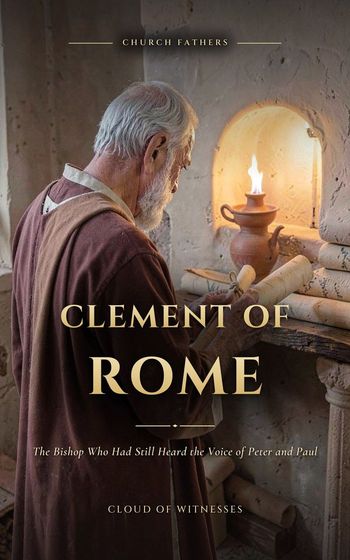
Clement of Rome barely exists in the historical record — no birth date, no personal portrait, not a single autobiographical line. What survives is a single letter, written decades after Peter and Paul died in Rome under Nero, sent to a church in Corinth where faithful presbyters had been deposed by an ambitious faction. Irenaeus of Lyon later testified that Clement "had seen the blessed apostles" himself, which makes this letter the oldest Christian document outside the New Testament to survive complete to this day. A cluster of later legends grew up around him too — exile in Crimea, a miraculous spring, a martyrdom by anchor that still makes him the patron saint of sailors — none of it confirmed by any source close to his own lifetime, and the book is careful to say so.
Move to the last living link to the apostle John
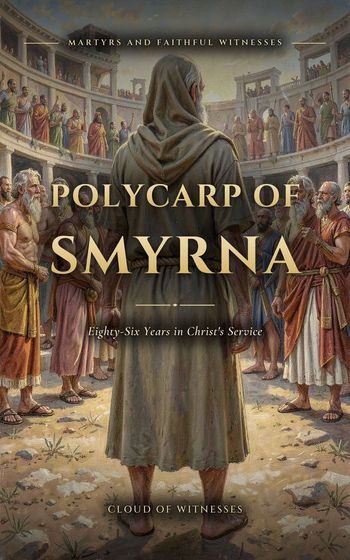
Polycarp of Smyrna was born while the first century was still running its course and grew up hearing, firsthand, the stories of someone who had actually walked with Jesus: the apostle John himself. He became bishop of Smyrna, met the martyr Ignatius of Antioch on the road to his own execution, traveled to Rome on a mission that tested the limits of Christian unity, and confronted one of the most influential heretics of his century face to face. The book draws on the oldest surviving sources about any named Christian martyr — Polycarp's own Letter to the Philippians, Irenaeus's personal testimony, and an account written by the church of Smyrna shortly after his death — to show what decades of quiet pastoral faithfulness looked like right up to its most decisive test.
Jump three centuries ahead to the fight over one word
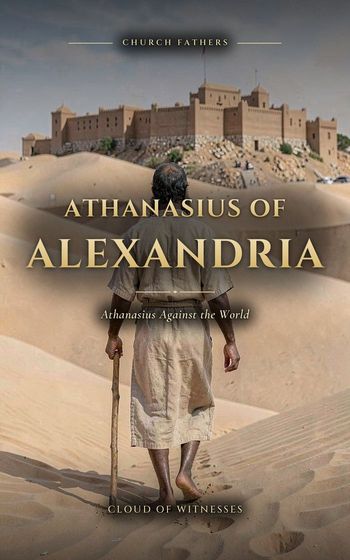
By the fourth century, the argument had shifted from apostolic memory to a single theological term. Athanasius of Alexandria witnessed the Council of Nicaea in 325 as a young deacon and spent the next forty-five years defending the word the council chose — that Christ is of the same substance as the Father — through five separate exiles under five different emperors. The book follows him from Trier to Rome to the Egyptian desert among the monks, without romanticizing the exiles as costless heroism: they cost him real pastoral power, real safety, real years of his life.
Skip to the Middle Ages, and a very different kind of question
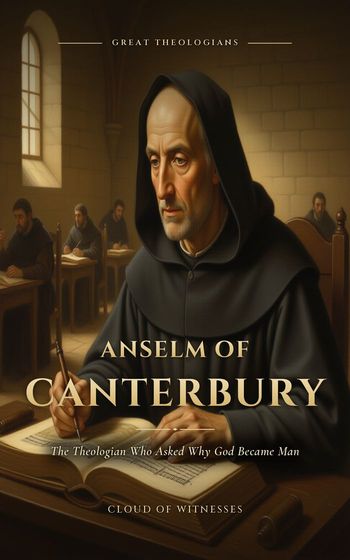
Seven centuries after Clement, in the Aosta Valley of northern Italy, a contemplative boy named Anselm would eventually cross the Alps on foot and end up at the Benedictine monastery of Bec in Normandy. There, after months of nearly obsessive contemplation, he formulated the ontological argument for God's existence, still debated by philosophers today. Reluctant and physically resistant before his own nomination, Anselm became archbishop of Canterbury in 1093 and clashed with two successive English kings, paying the price of two forced exiles. During the first of them he wrote Cur Deus Homo, establishing the satisfaction theory of atonement — the very foundation reformers like Luther and Calvin would build their own doctrines of salvation on, centuries later.
The Reformation breaks the question open
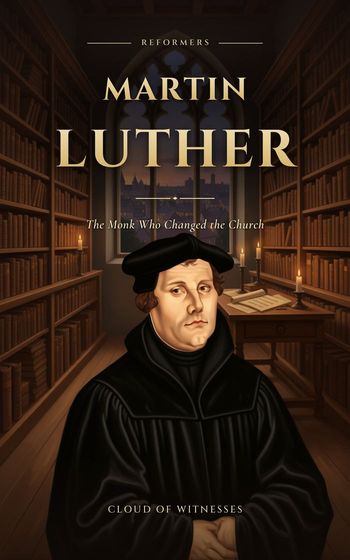
That link to Luther is not incidental — it's where the fifth biography in this path picks up directly. Martin Luther's own crisis started with a vow shouted in terror during a lightning storm and a monastery door he knocked on fifteen days later. The book follows him from the spiritual anguish of his Erfurt years, through the discovery in a Wittenberg tower that reshaped his understanding of grace, to standing before pope and emperor with the same answer: "I cannot do otherwise." It doesn't skip the hardest chapters either, including the violent rhetoric of his pamphlet against the rebelling peasants, a passage historians still argue over today.
A revival two centuries later closes the path
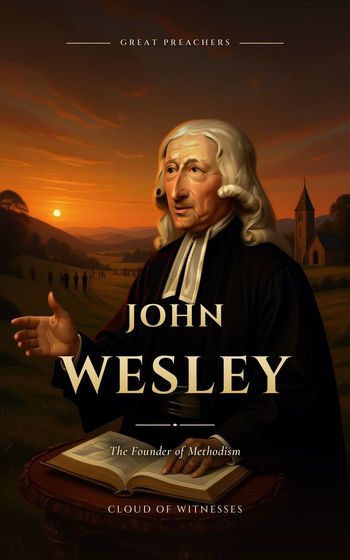
John Wesley grew up under his mother Susanna's rigorous discipline and founded, at Oxford, a small group of students so methodical about their spiritual life that classmates mockingly nicknamed them "Methodists." A failed mission to Georgia sent him home exhausted, until a May evening in 1738, hearing a reading of Luther's own words at a small London meeting, left him with what he called a heart "strangely warmed." What followed was open-air preaching to miners, decades of travel on horseback, and a movement that would outlive him by centuries.
How to actually build your reading path
Read these six in the order their subjects lived: Clement of Rome, Polycarp of Smyrna, Athanasius of Alexandria, Anselm of Canterbury, Martin Luther, and John Wesley. Each one belongs to the Cloud of Witnesses series, and together they trace a single, continuous argument about what it means to follow Christ faithfully — from a letter written in living memory of Peter and Paul to a revival that reshaped English-speaking Protestantism seventeen centuries later. Start with whichever era interests you most; the throughline holds together no matter where you begin.