The Christmas story your child needs to hear comes from two different Gospel writers, Luke and Matthew, each preserving a piece the other doesn't mention — and reading it well with a six- to eight-year-old means knowing which piece belongs where before you start.
What actually happens in the Christmas story, according to the Gospels?
Luke opens with the angel Gabriel visiting a young woman in Nazareth and asking her to say yes to something that will reshape her entire life. Mary and Joseph then travel from Nazareth to Bethlehem, find no room anywhere in the crowded town, and on that night Jesus is born in a simple stable, wrapped in cloths and laid in a manger. Shepherds out in the fields nearby hear the sky fill with the announcement and run to see the child for themselves. Matthew, writing separately, preserves a different scene: wise men from the East who follow a star for many days until they find the child. Both writers are telling the truth about the same birth — they're just each holding a different part of the story.
Do the shepherds and the wise men belong in the same scene?
Most nativity sets and Christmas cards put shepherds and wise men shoulder to shoulder around the same manger, and it's an easy assumption to pass on to a child without thinking twice about it. But Luke's shepherds and Matthew's wise men never appear together in either Gospel — they belong to two separate accounts, and conflating them is one of the most common small inaccuracies in how the story gets retold. It costs nothing to tell your child the more accurate version, and it actually makes for a better conversation: two very different groups of people, from two very different places, both drawn to the same child for their own reasons.
Why was there no room for Mary and Joseph in Bethlehem?
Luke's Gospel explains it plainly: Caesar Augustus had ordered a census of the entire Roman world, and Joseph, descended from the line of David, had to travel to Bethlehem to be counted there. Travelers from David's whole extended family were converging on the same small town at the same time, which is exactly why there was nowhere left to stay by the time a very pregnant Mary arrived. It's a detail worth passing on to your child as-is, because it answers the question kids usually ask first — not "why wouldn't anyone help them," but simply "why was the town so full."
How many wise men actually visited?
Matthew never gives a number. The idea of "three" wise men comes from the three gifts mentioned in his account — gold, frankincense, and myrrh — not from a headcount in the text itself. It's a small detail, but it's a useful one to get right with a child who's already sorting out fact from decoration: the Gospel tells you what the visitors brought and that they came from the East after following a star for many days, not how many of them made the trip.
Was Jesus really born on December 25th?
Neither Luke nor Matthew gives an exact date for the birth, and nothing in either Gospel points specifically to December 25th. That date is when the church settled on celebrating Christmas, not something Scripture itself records. This is worth being honest with your child about, in an age-appropriate way: the calendar day isn't really the point of the story. What Luke and Matthew actually care about recording — Mary's yes, the journey to Bethlehem, the manger, the shepherds, the star — is where the real weight of the story sits.
How do I read this with a young child without losing them?
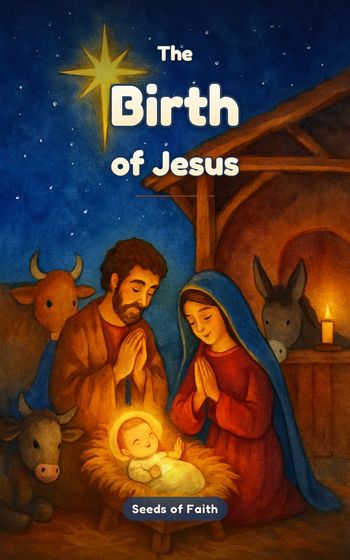
The Birth of Jesus tells this exact story faithfully from Luke and Matthew, written to be read aloud with vocabulary built for ages 6 to 8 — Mary and Joseph's journey with their donkey, the night in the stable, the shepherds running from their fields, the wise men following the star for many days. It keeps the two Gospel scenes properly separate rather than blending them the way ornaments and cards often do, and it closes with a verse to keep in your heart and ready-made questions to talk through with your child after reading, so you're not left improvising the conversation on the spot.
What should we read after Christmas?
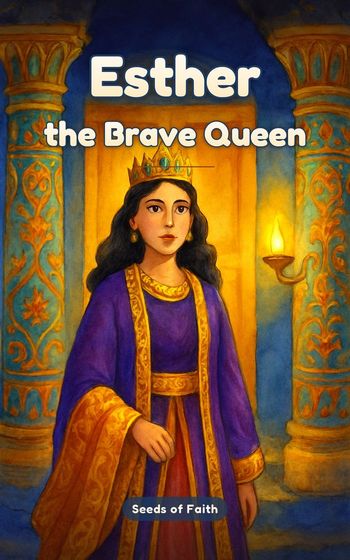
Once the season winds down, the easiest way to keep a nightly Bible-reading habit alive is to simply keep going with a story your child hasn't heard yet. Esther the Brave Queen follows a very different kind of courage — a young queen who has to decide whether to risk everything to protect her people — but it's built for the same age range, read aloud the same way, with the same kind of closing questions for parents and kids to work through together.
Keep the story going all year
The Birth of Jesus is the place to start this December, and Esther the Brave Queen is a natural next read once the season passes — both part of the Little Seeds of Faith series for ages 6 to 8. If you're looking for a fuller sense of which Bible stories to read in what order with a young child, the guide on where to start with Bible stories for kids lays out a complete path beyond just these two.