Martin Luther's 95 Theses, posted in Wittenberg in 1517, were a list of academic arguments against the sale of indulgences — payments that claimed to reduce the punishment for sin. Luther wrote them as an Augustinian monk and university professor, not yet planning to break with Rome, but the document set off the chain of events that became the Protestant Reformation.
Why did Luther write the 95 Theses?
Luther's protest did not start as abstract theology. It grew out of what he watched happen to his own parishioners: poor people in his own pastoral care spending their savings on indulgence letters sold by traveling preachers, believing the payment could shorten a loved one's punishment after death. That pastoral fury — seeing ordinary Christians pay money they could not spare for a promise Luther did not believe Scripture supported — is what pushed him to put his objections into a formal academic document meant for debate among scholars, not for the general public.
By the time he wrote the theses, Luther had already spent years wrestling with a much deeper question inside the Augustinian monastery at Erfurt: no amount of confession, fasting, or discipline could give him certainty that he was right with God. That anguish only broke during a period of study in a tower room in Wittenberg, where Luther's reading of Scripture reshaped how he understood divine grace — a shift that gave the theses their theological foundation even before indulgences became the public flashpoint.
What happened after Luther posted the 95 Theses?
The theses spread faster than Luther expected, translated and reprinted across German-speaking lands within weeks. Rome eventually summoned him to answer for his teaching, and in 1521 Luther stood before both pope and emperor at the Diet of Worms, refusing to recant with the words that would define the rest of his life: he could not act against Scripture and conscience, so he could not do otherwise.
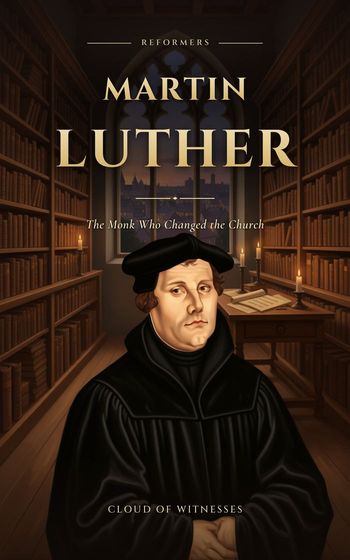
That refusal put him under imperial ban, and for his own safety Luther spent ten months in hiding at Wartburg Castle, disguised under the name "Knight George," using the isolation to translate the New Testament into German at a feverish pace. He later married a former nun, a decision that scandalized allies and enemies alike, and in the years that followed wrote a pamphlet against the rebelling peasants whose harsh tone historians still debate today. His full story, including the parts that don't flatter him, is told in Martin Luther: The Monk Who Changed the Church.
Was Luther the first reformer to challenge the church?
No. More than a century before Luther nailed his objections to a church door, Jan Hus was preaching in Prague that the Word of God belonged to every Christian, not to a caste of intermediaries who read it only in Latin. Hus drew on manuscripts by the English philosopher John Wycliffe that had reached Bohemia through a royal marriage, and he was eventually excommunicated, tried before an international council, and burned at the stake for doctrines he insisted he had never actually taught. His execution did not silence Bohemia — it ignited nearly two decades of war, and it reached all the way into Luther's own century. Luther, reading Hus's writings for the first time, is remembered for a striking admission:
"We are all Hussites without knowing it."
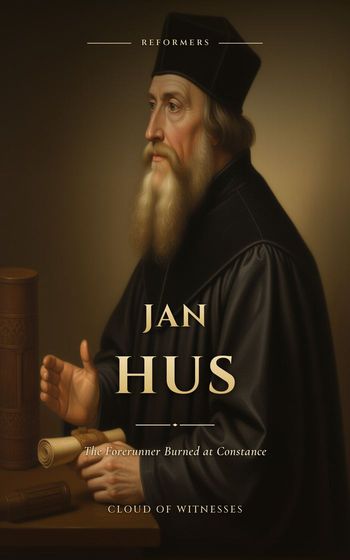
The parallels between the two men — the pastoral motive, the refusal to recant before a council, the reliance on Scripture over church tradition — are the subject of Jan Hus: The Forerunner Burned at Constance, which also traces the Wycliffe connection in full in our article on the Reformation's forerunners.
How does Ulrich Zwingli fit into the story?
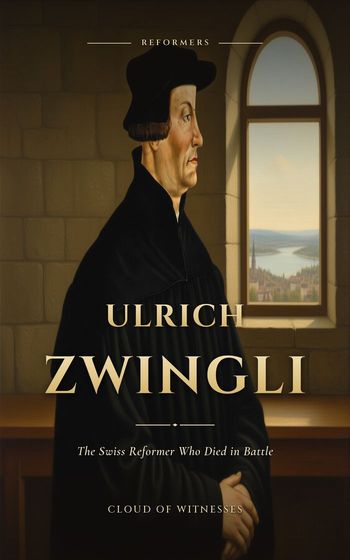
While Luther's protest was unfolding in Germany, a separate reform movement was taking shape in Switzerland, led by Ulrich Zwingli. In 1519, Zwingli climbed into the pulpit of Zurich's Grossmünster and announced he would preach straight through the Gospel of Matthew, chapter by chapter, from Erasmus's Greek text — ignoring the church's traditional lectionary. The break that followed abolished the Mass in Zurich, split Switzerland into Reformed and Catholic cantons, and eventually put Zwingli across a table from Luther himself at a meeting where the two reformers could not agree on the meaning of a single verse: what happens in the bread and the cup at the Lord's Supper. Zwingli died a few years later on the battlefield at Kappel, killed in the fighting between Switzerland's Reformed and Catholic cantons. His full story is in Ulrich Zwingli: The Swiss Reformer Who Died in Battle.
Were the theses really nailed to a church door?
The traditional account — that Luther nailed the theses to the door of Wittenberg's Castle Church on October 31, 1517 — is the version passed down by later sources close to his circle, and it remains the most widely accepted account of how the document became public. What matters most for understanding the Reformation is not the exact mechanics of how the theses were posted, but what they set in motion: a monk's pastoral objection to a specific abuse became, within a few years, a full theological rupture that Hus had anticipated by a century and that Zwingli was reaching independently in Switzerland at almost the same time.
Read the full stories behind the Reformation
Luther's 95 Theses make far more sense next to the men who came before and beside him — the monk, the forerunner burned a century earlier, and the Swiss reformer who could not agree with Luther on a single verse. All three narrative biographies belong to the Cloud of Witnesses series, and read together they tell a single, connected story rather than three separate ones.