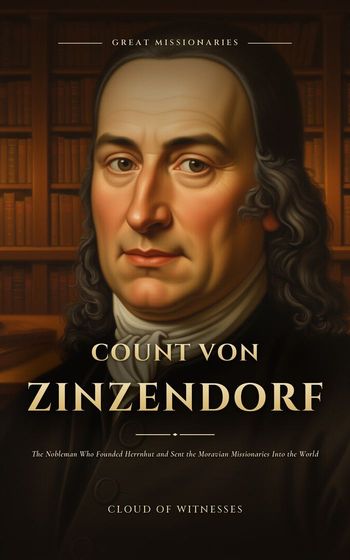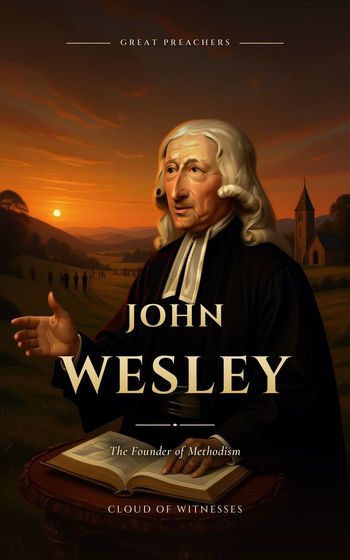
Count Nikolaus Ludwig von Zinzendorf was a German nobleman who, in his twenties, gave up a promised government career to open his estate to persecuted religious refugees — a decision that produced, without his intending it, the first great Protestant missionary movement of the modern era.
What made Zinzendorf so unusual, even as a child?
Zinzendorf's convictions ran deep long before he could act on them. Raised by a pietist grandmother who counted the theologian Philipp Jakob Spener among her close friends, he was already, at age eight, wrestling with whether he would rather be condemned alongside Christ than saved alongside anyone else. At fifteen he founded a secret order among his boarding-school classmates, sworn to evangelize the entire world. At twenty-two, he turned his back on the career his family had mapped out for him and instead opened his estate at Berthelsdorf to a group of refugees fleeing religious persecution — the community that would become Herrnhut.
What happened at Herrnhut on August 13, 1727?
The refugees who settled on Zinzendorf's land were not a unified group; rival factions pulled the small community toward division rather than unity. On August 13, 1727, during a communion service in Berthelsdorf, that fractured community experienced what the Moravians themselves would come to call their own Pentecost — a spiritual renewal so decisive that it's usually treated as the true founding moment of the Moravian movement as history remembers it, more than the estate's opening a few years earlier.
How did the first Moravian missionaries end up leaving in 1732?
Five years after Herrnhut's revival, Zinzendorf met a converted former slave named Anthony Ulrich in Copenhagen, who begged for missionaries willing to reach his own brothers still held in bondage. That appeal launched, in 1732, the first organized cross-cultural Protestant mission in history — sixty years before William Carey is often credited with starting the modern missionary movement. Moravian communities soon followed in the American colony of Pennsylvania, including the settlements of Bethlehem and Nazareth, and within a few decades the small Herrnhut community was sending out 226 missionaries around the world, roughly one out of every sixty of its members.
Who was John Wesley before the Moravians reached him?
Wesley's own story starts decades before he ever heard of Herrnhut. In 1709, a five-year-old John Wesley was pulled at the last possible moment from a burning window of the Epworth rectory, an episode he himself would later read as a sign that some purpose still awaited him. Raised under his mother Susanna's rigorous discipline, he founded at Oxford a small group of students so methodical about their spiritual life that fellow students, mocking them, nicknamed them "Methodists." A mission to the English colony of Georgia went badly, ending in a personal scandal that forced him to flee back across the Atlantic, spiritually exhausted and unsure his own faith had ever been real.
What does Count Zinzendorf have to do with John Wesley?
The connection runs through a Moravian named Peter Böhler. Zinzendorf's community sent Böhler to London, where he met that same spiritually exhausted Wesley, freshly back from Georgia. It was at a small meeting influenced by that Moravian circle, in May 1738, that Wesley heard a reading of Martin Luther's words and felt, in his own account, his "heart strangely warmed." That evening in London launched the ministry that would make Wesley one of the most tireless preachers in the history of English-speaking Protestantism — reluctant open-air sermons to coal-dust-covered miners, a system of small-group spiritual discipline that spread across England, and decades of roads covered on horseback, through hostile mobs and transformed crowds alike.
Was everything about the Moravian movement a success story?
No, and the honest account doesn't pretend otherwise. A period Moravians themselves called the "Sifting Time" saw devotional excesses and questionable practices that threatened to discredit the entire community. Zinzendorf's final decade brought real personal loss too: the premature death of his only son, followed soon after by the death of his first wife. Wesley's own later years carried their own costs — a friendship that ended in painful doctrinal rupture, though never in personal hostility, and a marriage that the same inflexible discipline behind his movement's success could never quite hold together in peace. None of that erases what either man set in motion, but it keeps the story a human one rather than a tidy legend.
What sources back up this story?
The account of Zinzendorf's life draws on academic reference works — the Encyclopedia of Christianity, Kurtz's Church History, the Lexham Dictionary of Church History — alongside autobiographical material preserved by Moravian biographers and John Wesley's own correspondence, which records his side of the Böhler connection independently. That combination matters for a period this thick with legend: it keeps the Herrnhut revival, the 1732 mission launch, and the Wesley connection anchored in documented history rather than in the more romantic version of the story that tends to circulate in shorter retellings.
Where to read the full story
Count von Zinzendorf traces the nobleman's path from that childhood conviction to the missionary movement he never set out to build. John Wesley follows the Anglican clergyman whose own turning point ran straight through a Moravian sent from Zinzendorf's community. Both biographies are part of the Cloud of Witnesses series, and reading them together shows how one nobleman's open estate in Saxony ended up shaping revival on two continents.